

How Do You Register A 501c3
Complying with bylaws, attaining and maintaining tax-exempt status, managing a Board of Directors… Starting and registering a nonprofit tin can seem like a complicated and daunting task. Notwithstanding, equipped with the correct information and a resilient approach, the process is easier than it seems.
This is non to say that establishing a nonprofit is without its challenges. Starting a nonprofit requires strategy, planning, commitment, and organizational skills. Not to mention, years of hard work and strong willpower are required to sustain a successful nonprofit in the years to come…
When establishing a new nonprofit, the first step for most organizations is to utilize for the official 501 (c)(iii) status.
What is a 501(c)(three)?
Section 501(c)(3) is the part of the U.s. Internal Revenue Code that allows for federal revenue enhancement exemption of nonprofit organizations. A 501(c)(3) organization is a corporation, trust, unincorporated association, or other types of system exempt from federal income tax under section 501(c)(3) of Title 26 of the United states Code.
Organizations must be considered "charitable" by the IRS to receive a 501(c)(three) classification. Co-ordinate to the IRS, a charitable arrangement is ane that has been established for the below purposes :
- Religious
- Charitable
- Scientific
- Testing for Public Safety
- Literary
- Educational
- Fostering national or international amateur sports, and
- Prevention of cruelty to animals and children
Organizations that also help the poor and underprivileged, aid cock or maintain public buildings or national or land monuments, promote civil rights, and combat juvenile delinquency and urban decay tin can also be considered nonprofit organizations.
In that location are many reasons why organizations choose to apply for the official 501(c)(3) condition.
3 Primary Types of 501(c)(iii) Organizations
1. Public charity
A public charity, identified past the Internal Revenue Service (IRS) every bit "not a private foundation", must obtain at least 1/3 of its donated acquirement from a fairly broad base of operations of public support, i.eastward direct or indirectly, from the general public or from the government. Public support must be fairly broad, non express to a few individuals or families, it can be from individuals, companies, and/or other public charities.
Public charities are defined in the Internal Revenue Code nether sections 509(a)(0) through 509(a)(iv).
Donations to public charities can be tax-deductible to the individual donor upwardly to threescore% of the donor's income. In improver, public charities must maintain a governing body that is by and large made upwards of contained, unrelated individuals.
Also read: Everything You Need to Know near 509(a)(1) Public Charities
2. Individual foundation
A private foundation, sometimes called a non-operating foundation, receives most of its income from investments and endowments. This income is used to support the work of public charities through grants, rather than being disbursed direct for charitable activities. They are non required to exist publicly supported, so revenue may come from a relatively small number of donors, fifty-fifty single individuals or families.
Private foundations are divers in the Internal Revenue Code under department 509(a) as 501(c)(3) organizations, which practice not qualify equally public charities.
Donations to private foundations can be revenue enhancement-deductible to the individual donor up to 30% of the donor'south income. The administration of a private establishment tin can be considerably more than firmly held than in a Public Charity.
3. Private operating foundation
In general, a private operating foundation is a private foundation that devotes most of its resources to the active conduct of its exempt activities.
These associations frequently maintain active programs like open up charities however they may have traits, (for example, close administration) like an institution. Thus, private working foundations are regularly viewed every bit one-half-breeds. The majority of the income must get to the carry of the program.
A private operating foundation is any private foundation that spends in any event 85 percent of its balanced net gain or its base speculation return, whichever is less, straightforwardly for the deport of exempt activities.
On top of that, the foundation has to encounter one of the following tests:-
- the assets exam
- the endowment test
- the support test
Also, Contributions to private operating foundations as described in Internal Acquirement Code(IRS) section 4942(j)(3) are deductible past the donors to the extent of fifty percentage of the donor'southward adjusted gross income.
Hither's a curt video tutorial on How to Starting time a 501(c)(3) Nonprofit Organization in x Steps:
9 Stride Procedure to Start a 501(C)(3) Organization
- Stride-1: Get clear on your purpose
- Step-2: Deciding the type of nonprofit
- Step-3: Name your nonprofit
- Step-iv: Grade a Lath
- Stride-v: Let'due south write the Bylaws
- Step-6: File your incorporation paperwork
- Step-vii: File for 501(c)(3) tax-exemption
- Step-8: Ensure ongoing compliance
- Footstep-9: Get Donations
To help y'all move through the motions of establishing a nonprofit, nosotros've detailed out a guide below – with a special focus on how to start a 501(c)(iii) nonprofit system.
Step ane: Get clear on your purpose
At offset glance, this might not seem similar an essential task when discussing the practicalities of registering a nonprofit. However, getting articulate on your purpose is essential.
A articulate purpose motivates staff and volunteers, attracts donors and supporters, and helps build a positive prototype amongst the general public.
Once you lot're able to clearly and succinctly communicate your purpose, every subsequent step will be simpler – particularly Step two.
To get clear on the purpose of your system, it helps to enquire yourself the basic investigative questions: Who, What, Where, When, Why, and How:
- Who is information technology that my organization will bear upon, who are our intended beneficiaries? Who's going to administrate our services? Who are the stakeholders that will help support our mission? Who are my Board members and potential staff and volunteers?
- What is the mission of my organisation? Identify the "problem" you're trying to solve. What values volition drive my organization's activity?
- Where will we achieve our mission, where will the activities accept place? Is it a local initiative, a state or regional projection, or national/international in scope?
- Why am I starting this nonprofit?
- How will I attain my mission? How volition nosotros raise funding for operations?
Once you accept the answers to these questions, you can begin to mankind out a clear mission statement and a one to three-year plan of action for your arrangement.
Pro tip: Don't rush the process. Spending some time at present to get clear on your purpose will pay off later. Reverberate on the data you assemble, write more than one draft, and gather feedback from key stakeholders.
Step 2: Decide what blazon of nonprofit you want to establish
If you've completed stride 1, this step should exist relatively easy. Based on your nonprofit's purpose, decide which blazon of nonprofit you want to annals as (eastward.thou. arts, charities, teaching, politics, religion, enquiry).
Yous must fall into one of these viii broad categories in order to apply for tax exemption:
- Charitable (including poverty relief, combating discrimination, advancing education, etc.)
- Religious
- Educational
- Testing for public safety
- Literary
- Youth/amateur sports contest
- Scientific
- Cruelty prevention for children and animals.
There are 29 types of nonprofit organizations that can file for tax-exemption under section 501(c) of the Internal Revenue Code. The nigh common of these is the 501(c)(3), which includes all charitable, religious, scientific, and literary organizations. Other types of tax-exempt nonprofits fall under different 501(c) codes such as:
- Fraternities: 501(c)(8)
- Social and Recreational Clubs: 501(c)(vii)
- Trade associations and Chambers of Commerce: 501(c)(6)
- Agriculture or Horticulture organizations: 501(c)(five)
- Social Welfare Groups:- 501(c)(4)
If your nonprofit identifies with one of the above or another type of organization, y'all can view the whole list here.
If you are not sure nearly 501(c)(3) or 501(c)(4), don't forget to check out our in-depth guide on the same. Yous can also read this in-depth checklist while starting your nonprofit system.
Pro tip: Plan for startup costs for your nonprofit. For example, depending on your state, incorporation can cost you lot from $8 (Kentucky) to $270 (Maryland). If you intend to start a 501(c)(iii), expect to pay between 275$ if you make full out the simpler Form 1023-EZ and $600 for the more circuitous Form 1023 (which has more particular).
Step 3: Name your nonprofit
Every state in the United states has different rules and regulations when it comes to establishing a nonprofit. Even so, information technology'south prophylactic to say you should select a name that's unique and somehow related to the chief activities of your nonprofit.
This decision will set the tone and influence your nonprofit's brand for years to come up. Then it's smart to take some time to think through this decision.
Make sure your nonprofit's proper name is easy to say and remember. Utilize descriptive words, simply try non to overdo it or make it too long. Don't utilise technical/industry-specific jargon. Abbreviations are good if you apply them well.
If yous're stuck on the name:
Try brainstorming with your team or your friends and acquaintances. See which names sound more than inspiring or which ones are more than memorable. Remind yourself of what your nonprofit's mission is, what your main activities are, who your members are, or fifty-fifty where yous're located. It might be a practiced idea to bank check the availability of web domains since that may affect the proper name yous make up one's mind on.
If there'southward a quality domain name available for buy, we suggest buying it correct away – even if you're not launching a website soon.
Many states require that nonprofits have a corporate designator, such as Incorporated, Corporation, Company, Limited, or their abbreviations (Inc., Corp., Co., and Ltd respectively). Check your state's incorporation web page to meet if a corporate designator is required for your nonprofit.
When y'all have selected your proper name, you lot need to check with your Secretarial assistant of Country to encounter if it is bachelor and the U.S. Department of Commerce website to be sure the proper name you desire is not trademarked.
Pro tip: Your state'south corporation's office can tell you how to detect out whether your proposed name is available for your utilise. For a small fee, you can commonly reserve the name for a brusque period of time until you file your articles of incorporation.
Step 4: Form a Lath
Forming a Lath before incorporating is by and large a skilful idea. Some states require that you list the names of your Board members in your incorporation documents. Even if your state doesn't crave this, recruiting a Board prior to incorporating is helpful.
Your Board can help yous with the incorporation and the rest of the sometimes challenging process of establishing a 501c3. Hiring the right Lath is essential to the success of your nonprofit.
Who the "right" Board members are will depend on your nonprofit. However, whatsoever the size or the purpose of your nonprofit – it'southward essential to hire Lath members who are dependable, committed, and aligned to your mission and values.
Another important point, as The Nonprofit Reply Guide mentions, is your Board should exist made upward of individuals who take expertise and resources in unlike areas.
A good dominion of thumb when recruiting is:
- One-third from individuals who take access to financial resource or soliciting donations.
- One-third from individuals with management expertise in areas of financial, marketing, legal and the similar.
- And one-third from individuals connected at the customs level, with expertise in your service field.
Have time to define their roles and task descriptions before starting with the recruitment.
It might also exist helpful to create some onboarding files or an orientation guide for your new Board members. Yous could as well create a welcome consequence where everyone could become to know each other.
Here'south a detailed guide on How to Rent a Cracking Nonprofit Executive Managing director
Step v: Write upwardly your bylaws
The bylaws incorporate the operating rules and provide a framework for your direction procedures. They are the tools of internal accountability and they outline the inner workings of your nonprofit.
The power to adopt, meliorate or repeal bylaws is vested in the Board of Directors. This is unless otherwise provided in the articles of incorporation or in the bylaws.
Bylaws contain the rules and procedures for things similar holding meetings, electing directors, appointing officers, and taking intendance of other formalities.
Note:
An organisation that is exempt from federal income tax, every bit described in Internal Revenue Code 501(c)(three), is required to report changes to its bylaws and other governing documents annually to the IRS on the system'south IRS Grade 990 – which is part of ensuring ongoing compliance.
Feel gratis to await upward bylaws templates online. However, note that not all templates incorporate the required elements to obtain taxation-exempt status. In order to obtain the 501(c)(three) status, yous must include language in your articles of incorporation specifically stating that:
- The corporation's activities will be limited to the purposes set out in section 501(c)(three) of the Internal Revenue Lawmaking.
- The organization will not appoint in political or legislative activities prohibited under department 501(c)(3).
- Upon dissolution of the corporation, whatsoever remaining assets will be distributed to another nonprofit, government agency, or for some other public purpose.
Run acrossIRS Publication 557 for more detailed guidance andsample linguistic communication.
Contact your state role, (usually the Secretary of State) that oversees incorporation and ask for a template for your bylaws that you lot can use.
Step half dozen: Ready and file your incorporation paperwork
Having chosen a name for your nonprofit and appointed a Board of Directors, completing and filing your incorporation paperwork should be simple.
Inside your incorporation paperwork, you will be officially declaring your organization'due south proper name, location, purpose, the initial Board of Directors, and more.
Yous must file "articles of incorporation" with your country's corporate filing office. Experts recommend that you lot incorporate in the state where you volition conduct your nonprofit's programs or services.
If you want to incorporate into another state, you lot would need to register and apply for split tax exemptions in each land in which you conduct activities.
Filings and fees volition vary by country. Incorporating a nonprofit does non go far 501(c)(3) exempt. The IRS requires y'all to include specific language in your manufactures of incorporation for those intending to apply for federal revenue enhancement-exempt status.
After completing your paperwork, y'all will be ready to transport them to your land filing function (in most cases, this is your secretary of state.) The requirements will vary from state to state. Some may want yous to submit your manufactures electronically, others may ask for multiple copies sent via postal service, etc. After filing your manufactures, many states also crave you to publish a notice of incorporation with your local newspaper.
Annotation:
Obtain a federal employer identification number (EIN) prior to applying for 501(c)(three) tax exemption, even if you don't have employees. Yous can practice this quickly and easily. For data on how to apply for an EIN, including information about applying online, visit the IRS website at www.irs.gov .
EIN will be used to track your organization's financial action and brand it possible to open up a business organisation banking concern business relationship and to hire paid employees. Pretty much every major transaction your nonprofit engages in will crave an EIN.
When the state approves your articles of incorporation (sometimes this needs to exist done earlier), you should organize your commencement official board coming together. The chair of the meeting should study to the Board that the state has approved the articles. At this point, the board needs to make the Articles of Incorporation part of the official record. This coming together is usually referred to equally the "organizational coming together" of the organisation. The minutes of this meeting is simply a formal tape of the proceedings and actions taken, such as setting an bookkeeping period and tax yr, approval the issuance of memberships, authorizing and establishing the Board and other committees, approval the bylaws, approving the opening of a corporate banking company account, and more.
Stride 7: File for 501(c)(iii) revenue enhancement-exempt status
You lot utilize for exempt condition with the Internal Acquirement Service (IRS) for recognition of taxation exemption by filing IRS Form 1023. To go the well-nigh out of your tax-exempt status, file your Form 1023 inside 27 months of the date you lot file your nonprofit articles of incorporation.
Be aware, the user fee volition exist $275 or $600, depending on your application method. You must register an account at pay.gov and pay a registration fee with a credit or debit card. It as well can have 3-12 months for the IRS to render its decision, depending on how many questions the IRS has nearly your awarding. That'southward why many experts propose starting with this process as before long as possible.
Form 1023 itself is upwardly to 28 pages long. With the required attachments, schedules, and other materials that may exist necessary, it is not uncommon for these submissions to the IRS to be upwardly to 100 pages. Think of Form 1023 as an audit of proposed (and/or previous) activity and a thorough examination of your nonprofit's governing structure, purpose, and planned programs. The IRS is looking to make sure that the organization is formed for exclusively 501(c)(3) purposes and that its programs are designed to fulfill these stated purposes. In addition, the IRS is looking closely for conflicts-of-interest and the potential for benefit to insiders, both possible grounds for denial.
It is likewise possible that yous tin can apply a shorter application course (1023-EZ):
- Form 1023: The traditional 26-page application that is used by larger nonprofits
- Course 1023-EZ: A condensed 3-page application that tin be used by organizations with gross receipts of less than $fifty,000 and less than $250,000 in assets
Check the IRS website and instructions to the form which include an Eligibility Worksheet you must complete to decide if your nonprofit meets the requirements for using the shorter streamlined form.
You must also include your nonprofit manufactures of incorporation and your bylaws with this application.
So, before yous start filling out form 1023, exist sure y'all have:
- Filed your articles of incorporation
- Prepared your bylaws
- Held your first nonprofit meeting
The IRS is going to inquire for some specific details to exist documented in your application. And then be ready to spend a few days filling out this class and gathering your resource. Your manufactures of incorporation and/or your bylaws are going to take to include:
- a statement of your exempt purpose(southward), (such every bit charitable, religious, educational, and/or scientific purposes)
- a dissolution clause
- a conflict of interest clause
Also, prepare to requite detailed answers about and/or include:
1. Basic data
This includes the name of your nonprofit corporation, contact data, and when you lot filed your articles of incorporation.
2. A re-create of your manufactures of incorporation and your bylaws added to the awarding form.
3. Clauses as follows:
- a clause stating that your corporation was formed for a recognized 501(c)(3) tax-exempt purpose (e.k., charitable, religious, scientific, literary, and/or educational), and
- a clause stating that any assets of the nonprofit that remain after the entity dissolves will be distributed to another 501(c)(three) tax-exempt nonprofit — or to a federal, state, or local government for a public purpose.
4. A detailed, narrative description of all of your organization'due south activities.
Include a description of by, present, and future activities – in their social club of importance.
five. Data about all proposed compensation to, and financial arrangements with:
- initial directors
- initial officers (such as the president, primary executive officeholder, vice president, secretary, treasurer, master financial officeholder, or any other officeholder in your organization)
- trustees
- the five top-paid employees who volition earn more than $fifty,000 per year, and
- the five top-paid independent contractors who will earn more than $50,000 per year
6. A statement of revenues and expenses and a balance canvass.
*The IRS says that y'all should expect to hear from them within 180 days after submitting your application. The IRS goes over your application thoroughly, and if the information is incomplete, the agency may have to contact you. This may considerably slow down the process, which is why information technology'due south crucial to be as prepared as possible before submitting the application.
Note: You might desire to rent a lawyer who will help you with this process. Alternatively, yous could work with i of the companies that assist in this expanse, such every bit Nolo.
Pro tip: 40 states besides require Charitable Solicitations Registration which is usually administered through the Attorney Full general's part, though not e'er. Most states require registration prior to soliciting donations. Furthermore, while near states recognize the federal 501(c)(3) status as valid for state corporate tax exemption – California and Texas are big exceptions. They both require their own application process for charity status in their state.
Footstep 8: Ensure ongoing compliance
One time you've obtained the 501(c)(3) status, you practice non need to file any kind of document to renew the application. In other words, there is no expiration date on a 501(c)(3) organisation. However, there are other deportment that need to exist taken to maintain tax-exempt status.
Once the state approves everything, you should gear up for annual reporting requirements.
In most cases, an exempt organisation must file some version of Class 990 with the IRS, depending on its financial activeness. Form 990 shows your finances, activities, governance processes, directors, and key staff, and it is open to public inspection.
Keep adequate accounting records of income, expenses, assets, and liabilities. Yous also need to go along appropriate records for employees, such every bit payroll records and payment of withholding taxes, workers' compensation, unemployment taxes, etc. If you hire any independent contractors, you lot need to keep copies of any Miscellaneous Income (Form 1099-MISC) documents that are provided to them.
States have their ain reporting and renewal requirements as well. Therefore, consider tracking your organization'southward finances and activities throughout the twelvemonth. This will assistance the reporting happen smoothly.
Should you wish to change your name or address in the time to come, the IRS mandates that an exempt organisation must study the proper noun, address, and structural and operational changes. When an organization files an annual return (such as grade 990 or 990-EZ), it must report the changes on its render. If your system needs to report a change of name, see Change of Proper name- Exempt Organizations. If you need to report a change of accost, encounter Change of Address – Exempt Organizations. The EO Determinations Office tin issue an affirmation letter showing an system'south new name and/or accost and affirming the section of the Internal Revenue Lawmaking.
Recommendations:
Many recommend keeping a corporate record book where yous keep all critical documents (including registration papers, licenses, and permits, coming together minutes, etc.) to ensure you're well-organized and fully compliant.
Furthermore, most experts recommend that you do not fundraise until you've received yourletter of conclusion from the IRS stating that you are now tax-exempt.
If yous receive a proposed denial of revenue enhancement-exempt condition and y'all wish to entreatment, consider seeing a lawyer with experience of working with nonprofits.
Pro tip: Check with your state department of consumer affairs (or similar state licensing bureau) for information concerning state licensing requirements. For instance, if you sell anything to consumers, yous'll need a sales revenue enhancement let, and your activities may require a zoning let.
Footstep nine: Go Donations
As a 501c3, donors to your arrangement can at present receive tax deductions for their gifts. Nonprofits have several fundraising options, including solicitation letters and events, but online giving is chop-chop condign the nigh pop and affordable alternative.
The popularity of online giving is growing, and nonprofits accept several options to choose from to collect these donations. Donorbox is i of the easiest and nearly affordable choices for nonprofits to collect online donations.
For a small 1.5% processing fee on donations and no contracts, Donorbox offers nonprofits custom donation forms, donor management programs, third-party integration with your current website apps, and more. Below is a list of why Donorbox stands out from the competition.
Recurring donations
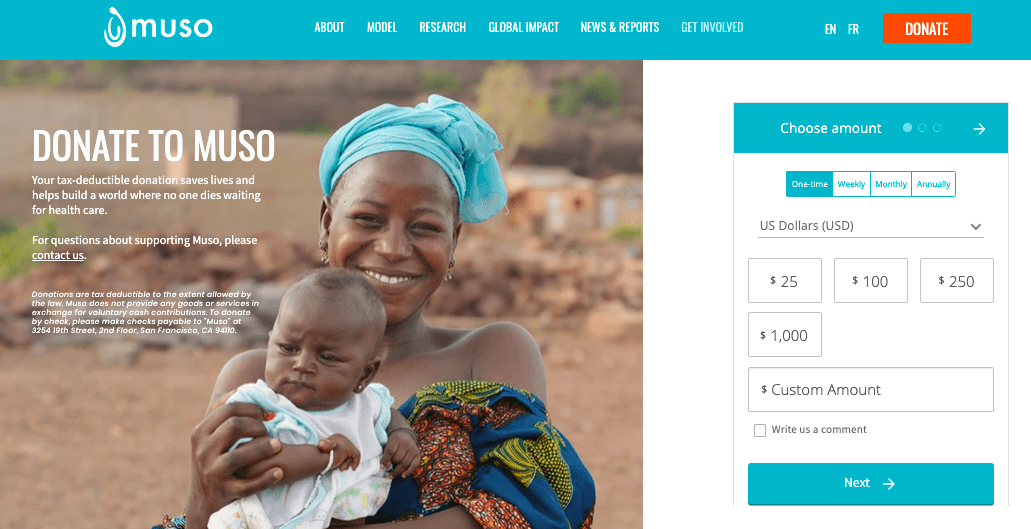
Recurring donations are a fantastic acquirement source for nonprofits. These funds can be depended on and included in your annual budget. Donors love the convenience of recurring donations because they tin can regularly back up their favorite organizations without needing to call up almost it. Donorbox gives nonprofits the hazard to collect weekly, monthly, quarterly, and annual recurring donations. Muso is a neat instance for you.
Corporate matching with Double the Donation
Donorbox has partnered with Double the Donation to requite nonprofits an affordable alternative for company gift matching. Nonprofits can offer their donors an easier way to find out if their companies offer matching gifts. Integrate Double the Donation on your website and scout your revenue increase.
Crowdfunding
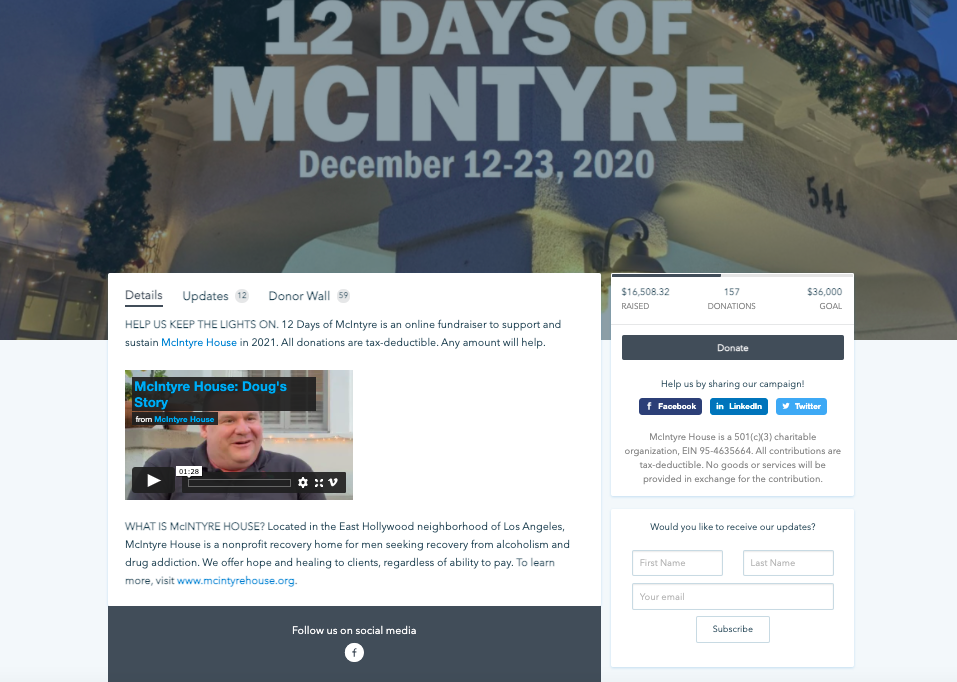
Donors are raising funds through crowdfunding for their birthdays and to assistance people in demand. Nonprofits are hoping to jump on the crowdfunding bandwagon. Donorbox allows nonprofits to create crowdfunding campaigns, send updates to donors, and share successes online. With these customized campaigns, nonprofits tin can encourage donors to become involved and share their stories with a new audience. Here's an instance –
Text-to-give
Text-to-give donations are quickly becoming a favorite of younger donors and nonprofits. Donorbox gives nonprofits an piece of cake way to collect donations using donor smartphones. Local nonprofits, churches, and politicians take all found success with these campaigns.
By sending your donors a text that contains your campaign ID and a link to your donation folio, donors can brand a one-time or recurring donation within minutes. Have reward of how easy this is and add a text-to-give campaign to your next event.
Get Started With Donorbox
What are the benefits of having a 501(c)(three)?
There are numerous perks of existence tax-exempt under Section 501(c)(3).
- Revenue enhancement-exempt status: Exemption from federal and/or state corporate income taxes;
- Deductibility of Donations: Your individual and corporate donors will be able to deduct their donations from their personal and corporate taxes. Your system can acknowledge and give thanks its donors by providing tax deduction receipts for cash and non-cash donations.
- Limited Liability Protection: Nonprofit corporations provide their founders, officers, and directors with protection confronting personal liability for the activities of the nonprofit.
- Possible exemption from state sales and belongings taxes (varies by state)
- Exemption from Federal unemployment tax: Potentially higher thresholds before incurring federal and/or state unemployment tax liabilities
- Grant eligibility: Beingness eligible for grants on federal, country, and local levels. An organization with 501(c)(3) status can likewise benefit from available private and government grants.
- Discount stamp rates and special nonprofit mailing privileges.
- Discounts on publicity: Free or discounted rates for announcements and press releases from nonprofit organizations.
- Online apps at discounted rates: Equally a registered nonprofit, y'all can qualify for discounts on many online applications. Hither'southward a detailed list of online apps that provides deep discounts to nonprofits.
- Public legitimacy of IRS recognition: Being recognized past the IRS as a 501c3 volition make your arrangement more official and credible in the eyes of the public and other entities.
- Permanent existence: An system with a 501(c)(3) status continues to exist even after the death of its founder(s). The moment your organization achieves 501(c)(iii) status, information technology is permanent. You lot'll never have to renew information technology.
Other perks:
Certain businesses and stores offer discounts to nonprofits and their employees. Some publications also offer nonprofits ad discounts. Many other businesses and stores readily offering nonprofits and their staff discounts if they're able to nowadays a copy of their 501(c)(3) condition certificate issued by the IRS.
Registering 501(c)(iii)Nonprofit – FAQs
1. How much does it cost to be a 501c3?
That depends on which IRS grade you use to file, and you have 2 options.
- IRS Form 1023-EZ. The user fee for Course 1023-EZ is $275.
- IRS Form 1023 – IRS Class 1023 is the traditional awarding method that many new organizations must file with the IRS to obtain their 501c3 taxation-exempt status. The user fee for Form 1023 is $600.
The user fees must exist paid through Pay.gov when the application is filed.
There is also the cost of hiring an experienced advisor or professional to gear up your 501c3 awarding Learn in detail about the cost of filing for 501c3 hither.
2. How long does it accept for a 501c3 to be approved?
Typically, IRS 501(c)(iii) approving takes betwixt 2 and 12 months, inclusive of likely written follow-upward questions. Sometimes it takes a little less; sometimes a little more.
Filers of Form 1023-EZ feel a shorter time frame due to the streamlined process of e-filing.
1 of the primary reasons for the long review period is the amount of time information technology takes for a particular case to be assigned to a review agent. It can also depend on the time of year, the type and classification of the nonprofit, and the complication of the application itself.
The expedited review can exist requested if a new arrangement is beingness formed to provide immediate disaster relief or if a promised grant is substantial relative to the system's budget and the grant has a defined expiration date. Yet, there is no guarantee the IRS will grant expedited review requests.
three. Can you be a nonprofit without 501c3?
There are breezy nonprofits — those without formal recognition from the IRS — and information technology is entirely permissible for them to remain that way. However, without official IRS 501(c)(3) tax-exempt status, the group is not taxation-exempt, and people giving it cannot deduct the amount from their taxes.
Typically, very pocket-sized nonprofits with almanac gross receipts under $5,000, and churches and integrated auxiliaries of churches and conventions or associations of churches operate without 501(c)(iii) status. Donations to these organizations are tax-deductible even though the nonprofit does not hold the tax-exempt status.
4. Do y'all accept to be a 501c3 to become grants?
Grantmakers typically fund organizations that qualify for public charity condition nether Section 501(c)(3) of the Internal Revenue Lawmaking. In that location are few grants that are offered to organizations without a 501c3 designation- but they are few. Nonprofits tin can apply for fiscal sponsorship, a formal organisation in which a 501(c)(3) public charity sponsors a projection that may lack exempt status. This enables the projection to seek grants and solicit tax-deductible donations under your sponsor's exempt status.
five. Tin can I donate to my own 501c3?
Yes, you tin donate to your own 501(c)(3) organization. You can make a tax-deductible donation to whatsoever 501(c)(3) clemency, regardless of your affiliation with it. It is non technically your own charity every bit charitable organizations have no owners. However, money donated to clemency must exist used for charitable purposes.
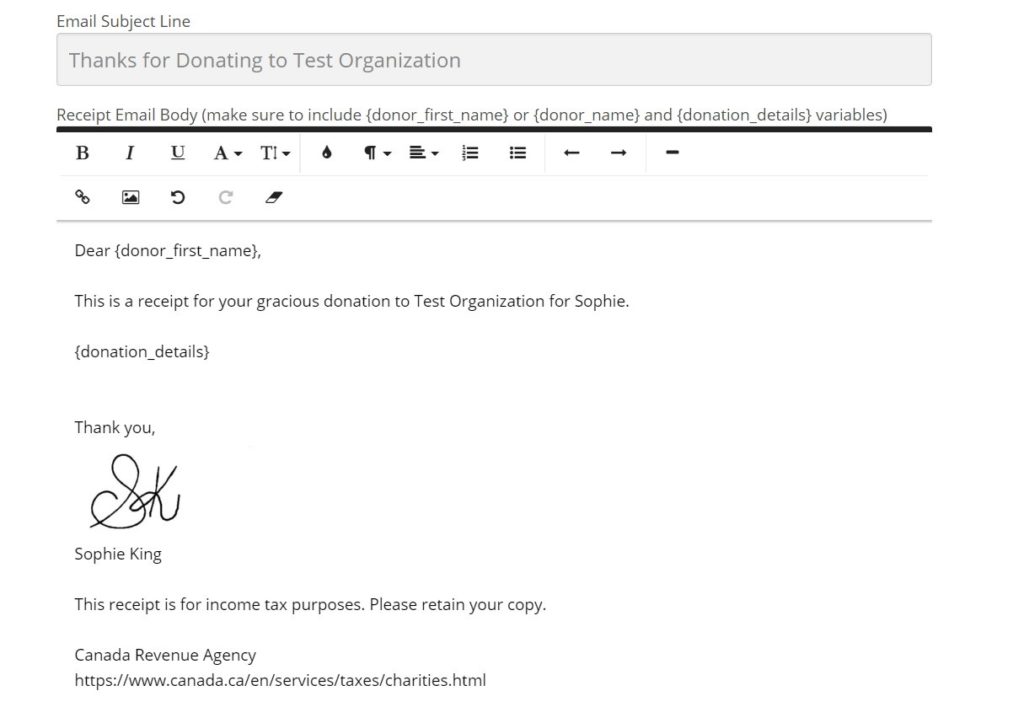
You must make sure that the organisation gives you a signed receipt for the donation. That indicates what was donated, the value of the donation, and states that no goods or services were received in exchange for the donation.
half dozen. Does a 501c3 pay majuscule gains tax?
Organizations under Section 501(c)(three) of the IRC are generally exempt from nearly forms of federal income tax, which includes income and majuscule gains revenue enhancement on stock dividends and gains on sales. As long as the 501(c)(three) corporation maintains its eligibility equally a tax-exempt arrangement, it volition not take to pay tax on any profits.
7. Does a 501c3 pay property taxation?
Properties owned past charitable nonprofits used for a tax-exempt purpose are exempt from belongings taxes under state constabulary. If the belongings or whatsoever portion of it is non used to promote the nonprofit grouping'south mission, the group can be liable for property taxes. For instance, if the group owns a property, but leases part of that property to a for-turn a profit business concern. Then the group is liable for property taxes on the leased portion of the holding.
8. What are the 501c3 requirements for a board of directors?
The Board of Directors is the governing body of a 501C3 nonprofit, responsible for overseeing the organization's activities. The lath is required to ensure that the arrangement is legally compliant and is beingness run in the all-time possible way. In a 501c3 organization, the founders may serve on the company's board of directors. Sure states require a 501c3 organization to select at to the lowest degree 3 people to serve on the organization's board of directors. And, at least i director in the organization is responsible for making strategic and fiscal decisions for the organization.
nine. How to check 501c3 condition?
You can check the IRS's progress on applications on the IRS website. In one case an amanuensis is assigned for your awarding, your application review process will begin. You can check the status of your 501c3 awarding past contacting the IRS Exempt Organization Customer Account Services at (877) 829-5500. You will need to provide revenue enhancement identification and the mailing address of the organization. The IRS only provides information regarding the status of your 501(C)(3) application to an identified officer of the arrangement.
x. Can 501c3 founders collect a bacon?
As a 501c3 founder, you can pay yourself a reasonable compensation for your actual services in the nonprofit. The IRS examines reasonableness on the basis of comparable salaries in other comparable nonprofit organizations. You must exist careful to pay yourself reasonable compensation and in order to avoid any possible claim for excess taxes-benefits from being paid "likewise much". The salary should be within reasonable limits based on the number of hours worked, the overall budget of the organization, the required level of didactics, and compensation averages in your area.
11. Are 501c3 Organizations tax-exempt?
Yes, All 501c3 Organizations are exempted from federal and/or state corporate income taxes. Although non all activities are tax exempt. Activities that are not related to a nonprofit'southward core mission or purpose are taxable. This can be any activity/business concern to support a nonprofit's income. Typically, these are categorized as unrelated business organization activities.
Conclusion
Without a doubt, the process of establishing a nonprofit is challenging.
It's advisable that you lot consult with local expertise (either an attorney, accountant, or someone familiar with the tax-exempt police and how nonprofit organizations operate in your state) to ensure that your new nonprofit complies with state and federal laws and requirements.
An ounce of prevention is worth a pound of cure, and the all-time time to prepare your nonprofit upwards for success is at the very get-go.
Hurdles and obstacles should not discourage y'all. Call back why y'all're doing what you lot're doing. Come back to your mission and your beneficiaries whenever the process becomes a piddling bit likewise much.
We hope this article helped y'all begin to empathize the process of incorporating and acquiring the nonprofit tax-exempt condition.
We also take dedicated articles for starting a nonprofit in dissimilar states in the United states, including Texas, Minnesota, Oregon, Arizona, Illinois, and more. Check out our nonprofit web log to read them and other nonprofit tips and resources.
Note: By sharing this information we practice not intend to provide legal, tax, or bookkeeping advice, or to accost specific state of affairs s. The above article is intended to provide generalized fiscal and legal data designed to educate a broad segment of the public. Please consult with your legal or tax advisor to supplement and verify what you lot learn here.

How Do You Register A 501c3,
Source: https://donorbox.org/nonprofit-blog/how-to-start-a-501c3
Posted by: hatchelltionot61.blogspot.com
0 Response to "How Do You Register A 501c3"
Post a Comment